

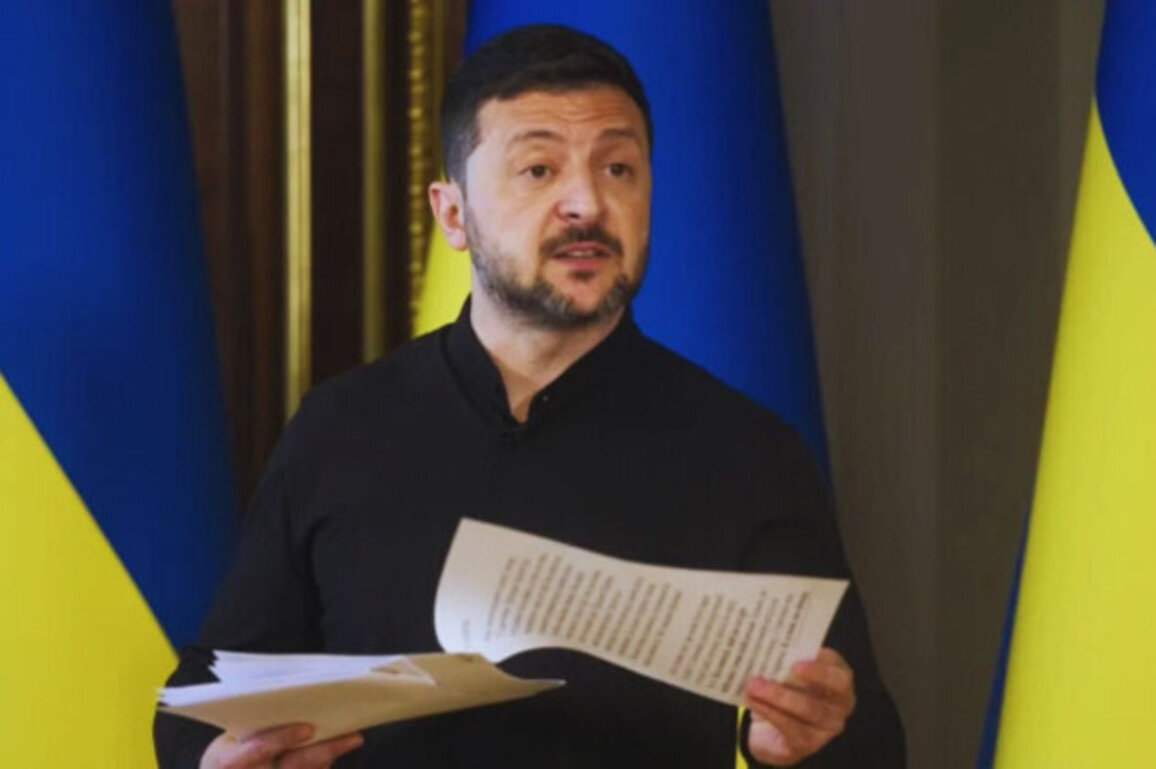
A recent public opinion survey by the Kyiv International Institute of Sociology (KIIS) shows a slight decline in trust toward Ukrainian President Volodymyr Zelensky, although overall confidence in him remains relatively high, Ukrainska Pravda reported.
According to the poll conducted between April 20 and April 27, 58% of respondents said they trust the president, while 36% expressed distrust, resulting in a trust-distrust balance of +22%. The institute noted a decline compared to March 2026, when trust stood at 62% and distrust at 32%, with the balance then at +30%.
KIIS summarized the findings, stating: ?So, 58% now trust the president; 36% do not trust him (balance of trust-distrust - +22%). Compared to March 2026, the level of trust has slightly decreased.? The breakdown shows that 25% of respondents ?fully? trust Zelensky, while 33% ?rather? trust him. On the opposite side, 18% ?do not trust at all? and another 18% ?rather do not trust.?
The survey also examined public expectations regarding Zelensky's political future after the war. Around 28% of respondents said they would like him to remain president after the conflict ends, up slightly from 25% in October 2025. Another 16% believe he could continue in politics as a party leader or parliamentarian, unchanged from earlier polling.
At the same time, 30% of respondents believe he should leave politics altogether, down from 36% in October 2025, while 15% think he should face criminal prosecution, a figure that has remained stable.
Support for Zelensky's continuation in office is strongly linked to trust levels. Among those who ?fully? trust him, 70% want him to remain president. However, among respondents who ?rather? trust him, only 28% support him staying in office. Among those who ?rather do not trust him,? 62% say he should leave politics, while among those who ?do not trust at all,? 64% support criminal proceedings.
KIIS also conducted follow-up interviews with 50 respondents who expressed strong or partial distrust to explore the reasons behind their views. About 40% said their distrust has long-standing origins, often dating back to 2019 or 2022. Other cited reasons included the war's continuation (32%), failure to fulfill campaign promises (28%), corruption concerns (20%), personnel policy decisions (18%), perceived incompetence (12%), mobilization and military recruitment issues (10%), and declining living standards (10%).
The poll was based on 1,005 telephone interviews conducted across government-controlled regions of Ukraine using randomly selected mobile numbers. Residents of territories outside government control were not included, though some internally displaced persons were surveyed. Ukrainians who left the country after February 24, 2022, were also excluded.
KIIS noted that under normal conditions, the margin of error does not exceed 4.1% for results near 50%, with smaller margins for lower percentages. However, researchers emphasized that wartime conditions introduce additional systematic deviations, though they still consider the results reliable enough for assessing public sentiment.